Why Do I Wake Up Hot at Night? Menopause Sleep FAQs
22 August 2026
Why do I wake up hot at night during menopause? Hot flushes can interrupt sleep, but heavy bedding, a warm room, medicines and other health issues may also contribute. Notice what happens around the waking rather than assuming every warm night has the same cause.
It is frustrating to throw off the duvet and then feel chilly a little later. You may want an answer that is more practical than another cooling-product advert. Start with these common questions.
Is feeling warm the same as having night sweats?
Not necessarily. The NHS describes night sweats as sweating that soaks nightclothes and bedding even when the place you sleep is cool. Feeling too warm under a heavy duvet can be a different experience.
When you make notes, describe the detail: waking hot, needing to change a damp top or soaking the sheets. That is more useful than trying to choose the correct medical label yourself.
Are night sweats always caused by menopause?
No. Menopausal symptoms may be part of the picture, although they are not the only possible explanation. The National Institute on Aging's menopause sleep guidance discusses the wider issues that can affect sleep at this stage of life.
Tell a clinician about medicines and other symptoms as well as sweating. Avoid stopping prescribed treatment on your own while trying to work out the cause.
What should I change in the bedroom first?
Look at one detail you can safely adjust: an extra blanket, a heavy set of nightwear or a heating setting that leaves the room uncomfortable. Try a manageable change rather than replacing the whole bed.
If you share a room, discuss it before bedtime. You may prefer separate bedding layers so one person can add warmth without the other having to sleep under the same amount.
What to wear to bed with menopause night sweats?
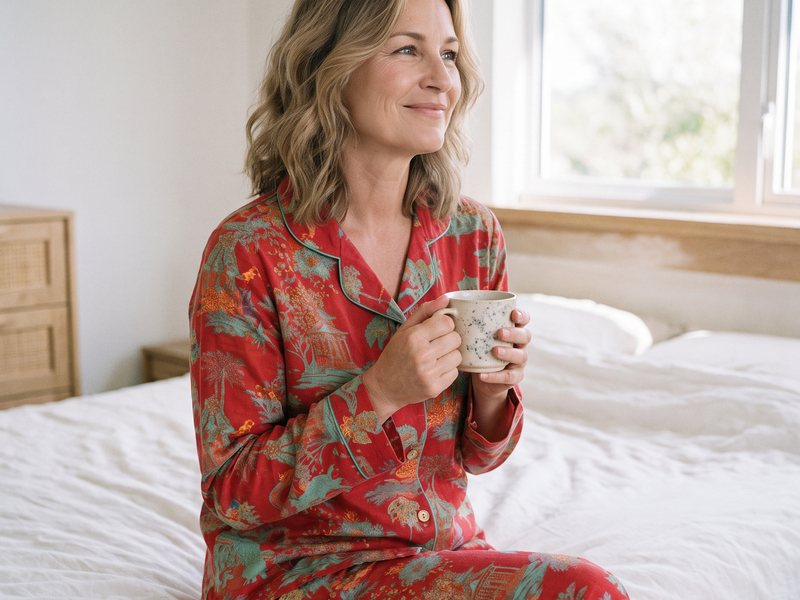
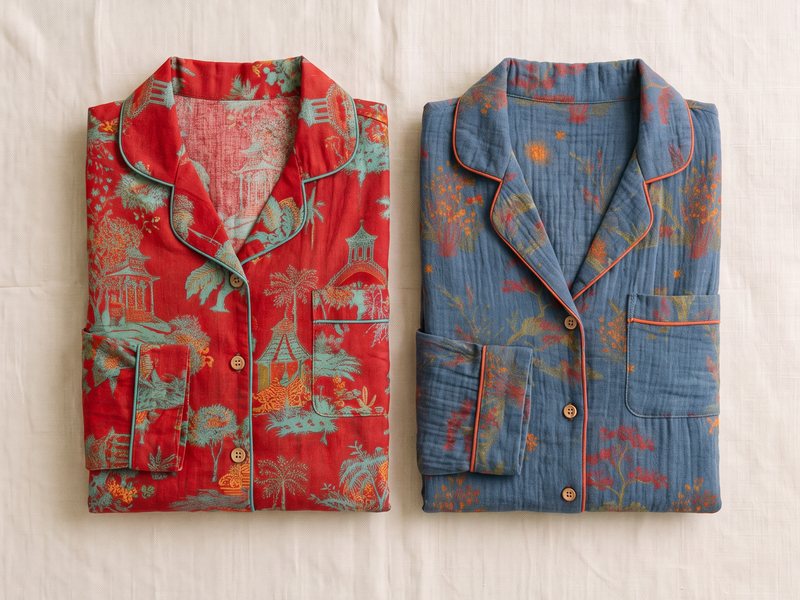
Choose a comfortable fit, a fabric you enjoy and the coverage you prefer. The Oriental Bloom Pyjama Set is 100% cotton with full-length trousers. The Wild Tiger Short Pyjama Set is 100% viscose, with less coverage around the legs.
Neither is a treatment for sweating. Keep a spare within reach if changing helps you feel comfortable, and follow the garment's care instructions after use.
Is cotton always the best fabric?
There is no universal winner for every garment and sleeper. Fabric weight, construction, fit and the rest of the bed affect the experience too. Viscose and cotton are different fibres, so a product's composition matters more than a broad collection label.
If you dislike trouser elastic, compare the shape of the Let Me Sleep Nightdress. A style change may address a clothing irritation even when it does not explain the sweating.
Should I keep a record?
A few morning notes can help: what woke you, whether clothes or bedding were damp and how tired you felt during the day. Approximate times are fine. You do not need to watch the clock all night to create a useful record.
When to see a GP about night sweats?
The NHS advises speaking to a GP about regular night sweats that wake or worry you, and sweats with symptoms such as unexplained weight loss or a high temperature. Do not keep postponing the conversation while you try another fabric.
Where can I find reliable information?
The Menopause Charity and The Sleep Charity offer accessible resources. Our guide to menopause and insomnia explains how to prepare for a broader sleep conversation. Your description of what is happening matters, even when you are unsure of the cause.