Nightdress or Pyjamas for Menopause? Choose for the Way You Sleep
19 October 2026
Choosing a nightdress or pyjamas for menopause depends on your preferred coverage, fit and movement. A nightdress removes the trouser waistband; a pyjama set keeps the legs covered. Check measurements and fabric rather than assuming either style suits everyone.
The pyjamas you used to love can suddenly feel different. Perhaps the waistband seems more noticeable when you sit down, or the fabric twists when you turn in bed. Buying the same style in another colour will not necessarily solve the irritation.
Choosing a nightdress or pyjamas for menopause is mostly about how you prefer to sleep. There is no rule that says one style is better for every woman, and you certainly do not have to dress differently simply because you have reached a particular birthday.
A nightdress without a trouser waistband
A loose nightdress removes the trouser waistband from the decision. That can appeal if you dislike pressure around your middle or prefer a single garment at bedtime. Check room across the bust and hips, since a generous hem does not always mean the top of a garment will feel equally relaxed.
Our Let Me Sleep Nightdress has short sleeves and a loose, knee-length silhouette. It is worth considering if you want less coverage on your arms and legs. Read the product details for the particular style rather than assuming every nightdress has the same fabric or fit.
A longer-sleeved option such as the Pick-a-Print brushed cotton nightshirt may suit someone who wants coverage above the waist without matching trousers. Its button-through front also gives you another practical detail to consider.
Full-length cotton pyjamas during menopause
Separate tops and bottoms make sense if you prefer your legs covered or dislike a nightdress moving upwards during the night. You can also judge the comfort of the top and trousers individually. A set should give enough room for both, rather than fitting beautifully in one place and pulling in another.
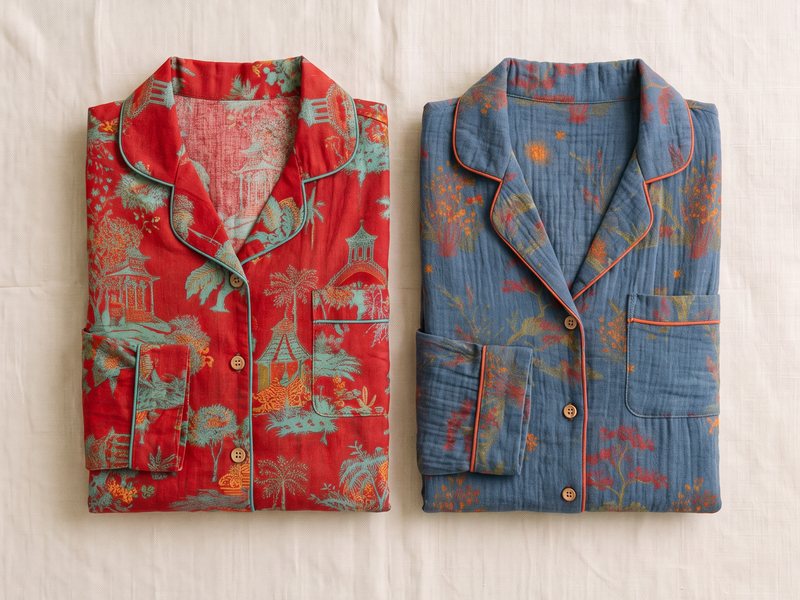
The Oriental Bloom 100% cotton pyjama set has full-length trousers and a relaxed button-through top. The Sweetheart Gauze Pyjama Set is another cotton option with a light textured fabric. Consider the measurements and your preferred coverage before choosing a print.
Try a movement check instead of judging by the mirror
During an ordinary fitting, sit on the edge of the bed, reach forwards and gently bend your knees. Notice whether the shoulders pull, the waistband presses or the trousers feel short when you sit. A garment can look loose when standing and still feel awkward in bed.
Follow the retailer's fitting and returns instructions, keeping the item in the required condition. You can learn plenty about fit without wearing or washing it overnight. Avoid automatically sizing up if doing so leaves the neckline or shoulders uncomfortable.
Separate comfort from medical claims
A 2025 pilot comparing cotton and wool sleepwear did not find significant objective sleep differences. It did not compare nightdresses against pyjama sets. Your preference can therefore remain a practical clothing choice.
Your choice can therefore be practical and personal. Think about the parts of your current nightwear you would change, then look for a style that addresses those details. A different waistband, sleeve length or shape may matter more to you than a fashionable fabric description.
A simple way to narrow the choice
Write down your three priorities before shopping. Those might be no trouser waistband, covered shoulders and an easy wash routine. Another woman may want full-length trousers, a button front and a favourite colour. Both lists are perfectly reasonable.
Can I wear different styles on different nights?
Absolutely. Keep a nightdress for evenings when you want less around your waist and a set for nights when you want more coverage. Your wardrobe does not need one permanent answer.
Night Owl is a small UK company offering comfortable nightwear for women in midlife. We support The Menopause Charity and The Sleep Charity. If disturbed sleep continues to affect your day, their resources and a conversation with a healthcare professional are useful next steps.
For related reading, see our guide to choosing pyjamas when your body changes.