
Lavender for Menopause Sleep: What the Research Really Says
6 July 2026
Does lavender help menopause sleep? The evidence is limited, so it is better to regard a lavender scent as an optional preference than a reliable insomnia treatment. You can enjoy a familiar fragrance without needing it to produce a particular sleep result.
Lavender appears on pillow sprays, bath products and almost every bedtime gift shelf. That familiarity can make the claims feel settled. It is worth taking a closer look before assuming that a pleasant smell and a proven clinical benefit are the same thing.
What did a clinical trial find?
A 2021 randomised trial of lavender aromatherapy in postmenopausal women with insomnia reported no statistically significant difference between the groups in its primary outcome after treatment. Some results within groups or on other measures should not be treated as proof that lavender worked better than the comparison treatment.
That distinction can get lost in a short product caption. A study reporting improvement somewhere does not automatically establish that the ingredient caused it. The main comparison, study design and uncertainty all matter when interpreting a headline.
How should I read a lavender sleep claim?
If you are considering lavender essential oil for sleep during menopause, ask what the claim actually says. Is it describing a scent people enjoy, or promising deeper sleep and fewer night sweats? Does it link to a relevant human study, and does the study support the exact promise?
Evidence about an ingredient also does not prove that every spray, candle or blend has the same effect. Different products and ways of using them are not interchangeable. You do not need to become a researcher; a cautious claim and a clear source are helpful signs.
What if I simply like the scent?
Enjoying it is enough of a reason to choose a suitable product, provided it agrees with you. Follow the manufacturer's instructions and stop if it causes irritation or makes you feel unwell. Avoid improvising with concentrated oils in food, on skin or in bathwater.
If fragrance bothers you, leave it out. A bedtime routine does not become less valid without a particular smell. Someone else's favourite product may be an irritation in your bedroom, especially if you share the space.
Build a fragrance-free bedtime routine for women
Start with familiar things: put tomorrow's essentials somewhere convenient, turn away from work messages and choose an activity you enjoy. A few pages of a book or a quiet drink can mark a pause without introducing another product.
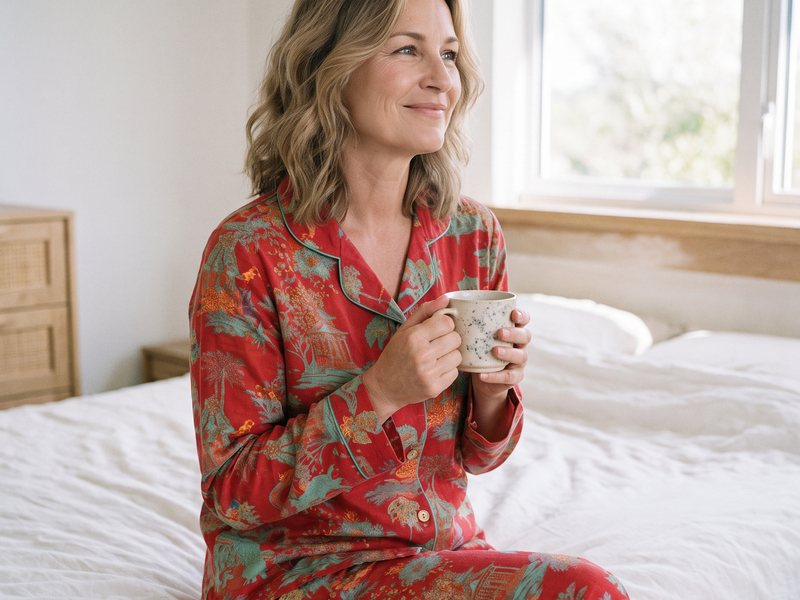
Comfortable clothing may be part of that pause. The Oriental Bloom cotton pyjamas offer a full-length button-through option, while the Let Me Sleep Nightdress provides a loose one-piece shape. Compare measurements and coverage to your own preferences; neither is a sleep treatment.
What deserves attention beyond a scent?
Notice what is actually disturbing your nights. Feeling hot, persistent pain, worry or snoring may need a different response. The National Institute on Aging's menopause sleep guidance gives a broader overview to discuss with a healthcare professional.
Our guide to menopause and insomnia can also help you prepare a few useful questions. You do not need to keep buying bedtime products before asking for support.
Can I skip aromatherapy altogether?
Absolutely. Choose the things that feel comfortable and manageable, with realistic expectations about what they can do. The Menopause Charity and The Sleep Charity offer information beyond product marketing. A friendly evening routine should fit your preferences rather than leave you feeling that you are missing a secret ingredient.