How to Care for Cotton and Viscose Pyjamas
14 September 2026
Knowing how to care for cotton and viscose pyjamas starts with the garment's own care label. Fibre content is useful background, but construction, trims and colour can change what an item needs. Follow the instructions for that particular piece rather than using one wash setting for the whole drawer.
It is easy to put a favourite set into the usual load without looking. A moment spent checking the symbols can prevent an avoidable washing mistake, especially when a smooth viscose set and a textured cotton set look similarly lightweight.
Read the label before the first wash
The GINETEX guide to care symbols explains washing, bleaching, drying, ironing and professional-care symbols. A number in a wash symbol gives a maximum temperature. Bars underneath indicate a gentler process, so temperature is not the only instruction that matters.
Reading care labels on cotton nightwear is just as worthwhile as checking a more delicate-looking item. Do not assume cotton automatically means a hot wash or unrestricted tumble drying. Look for the actual guidance attached to the garment.
Keep cotton and viscose distinct
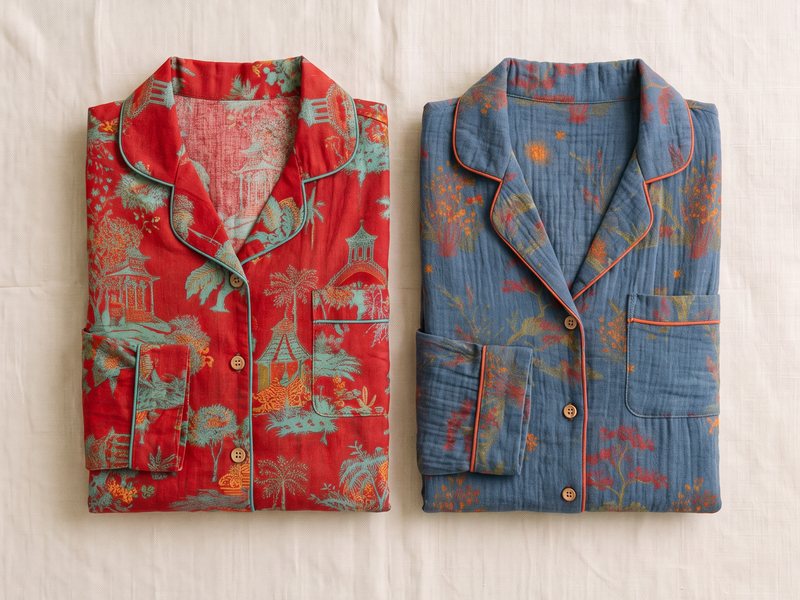
Our Oriental Bloom Pyjama Set is 100% cotton. The Sweetheart Gauze Pyjama Set is also 100% cotton, with a different fabric construction. Check each label rather than assuming their shared fibre means every care detail is identical.
The Wild Tiger long pyjama set is 100% viscose. Its current product guidance specifies a gentle 30°C wash and air drying. That instruction applies to that product, rather than every viscose garment you may own.
How to wash viscose pyjamas gently
Start with the permitted temperature and wash process on the label, then use the matching machine setting. Avoid overfilling the drum, and consider whether other items have fastenings or rough surfaces that could catch the fabric. Follow any instruction about washing inside out or separating colours.
Use laundry products in line with their packaging and the garment guidance. More detergent is not automatically more effective. If the label calls for a process your usual load does not provide, keep the item separate rather than hoping the standard cycle will be close enough.
Dry according to the instructions
Check whether air drying is required and whether the label gives a particular method. Arrange the garment as directed, allowing it to dry fully before storing it. Avoid wringing, high heat or a dryer setting that the instructions do not allow.
If ironing is permitted, use the stated temperature. A quick look at the symbol is more reliable than guessing from the fabric's softness. Keep any print, trim or button detail in mind as well as the main fibre.
Choose a wash routine that suits actual wear
Wash soiled or sweaty nightwear appropriately, following its label. There is no useful universal rule that every woman should wear pyjamas for a fixed number of nights. Temperature, sweating and personal needs vary.
If you change during the night, keep worn clothing somewhere suitable until washing rather than leaving damp fabric folded in a drawer. A spare set can make the routine easier without needing a large collection.
What if the product page and label disagree?
Check with the retailer before washing if you cannot reconcile the instructions. Keep a photograph of the label and the order details handy when asking. Avoid experimenting with the strongest process while waiting for an answer.
For help choosing another style, read our comfortable sleepwear guide. The Menopause Charity and The Sleep Charity provide wider information if sweating or disrupted sleep is making your nightwear routine harder. Caring for clothes is useful; ongoing symptoms deserve their own conversation too.