Autumn, Menopause and Sleep: Adjusting to Darker Days
4 October 2026
Autumn menopause sleep tips for darker days start with a few ordinary adjustments: seek daylight when you can, keep a familiar daily rhythm and choose bedroom layers to suit how warm you feel. A change of season does not mean you need a cupboard full of sleep supplements.
There can be a lovely side to autumn, from crisp walks to the first evening with a blanket. Darker mornings may also make getting up feel harder. If menopause has already unsettled your nights, it is understandable to notice the seasonal change.
Look at the whole pattern
Menopause sleep when the seasons change can involve several overlapping things. Earlier darkness, different work routines, central heating and symptoms may all arrive together. Avoid assuming that every difficult night has one hormonal or seasonal explanation.
The National Institute on Aging's menopause and sleep guide discusses sleep changes in a wider context. A simple note about waking, warmth and daytime tiredness may help you spot what is actually happening, without checking a sleep score every morning.
Make daylight easier to find
Consider where a short spell outside could fit into an existing day. You might walk during a lunch break, take a phone call in the garden or step outside after breakfast. It does not have to become a long fitness session.
If you work indoors, a daylight break can also mark a pause between tasks. Plan around what is practical and safe in the weather. Missing a walk on a wet Tuesday is not a reason to abandon the habit for the rest of autumn.
Dress for your body rather than the calendar
The evenings may look wintry while a heavy fleece set still feels far too warm. For autumn nightwear for women who feel hot, consider lighter fabric with the amount of coverage you like. More coverage does not always require a thicker cloth.
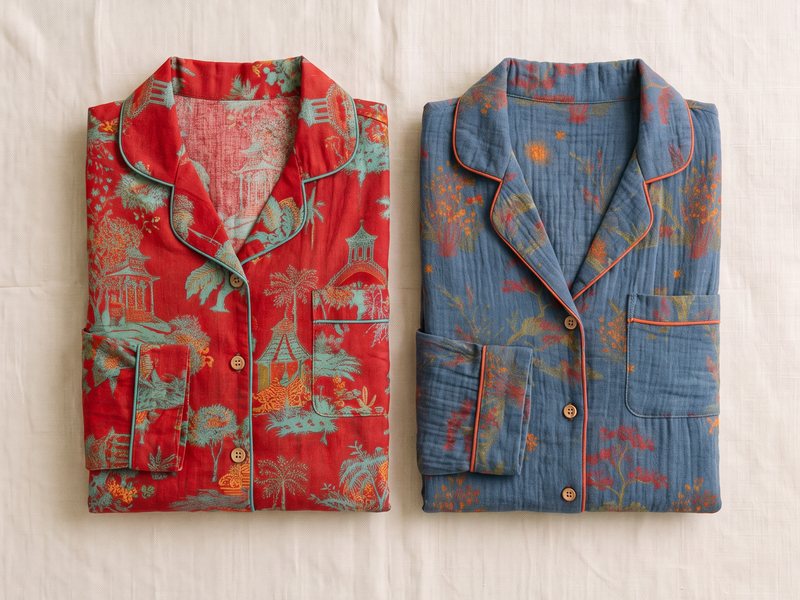
Our Oriental Bloom cotton pyjamas have full-length trousers and a button-through top. The Wild Tiger long pyjama set is 100% viscose and offers a different, softer drape. Compare the fabric descriptions and measurements rather than choosing by the season printed on an advert.
Keep a removable layer handy for getting out of bed. The Sunday Waffle cotton robe can be put on when needed, instead of wearing extra layers under the duvet all night.
Be clear about vitamin D and sleep claims
The NHS vitamin D guidance advises adults to consider a daily supplement containing 10 micrograms during autumn and winter. This is public-health advice about vitamin D, rather than a treatment recommendation for menopausal insomnia.
Ask a pharmacist or clinician if you are unsure how that advice fits your medicines or health needs. A product marketed for winter wellbeing should not be assumed to fix waking, night sweats or persistent low mood.
When is winter low mood worth discussing?
Feeling less enthusiastic on a grey morning is not automatically seasonal affective disorder. The NHS information on SAD describes a pattern of depression linked to seasons. Persistent low mood, loss of interest or difficulty managing daily life deserves a conversation with your GP.
You do not have to wait for spring before asking for support. Mention sleep and menopausal symptoms as part of the same conversation if they are affecting you too.
For everyday support, explore The Menopause Charity and The Sleep Charity. Our eight autumn sleep tips offer another practical starting point. Choose an autumn routine that feels achievable, with room for the occasional late night and rainy morning.